Trussium
Cloud-native runtime for AI applications
Trussium is a provider-neutral runtime for operating AI capabilities across hosted providers and private models. It gives applications one HTTP API and one operational contract while allowing providers, models, and deployment environments to change independently.
The runtime is designed for teams that need normalized capability responses, request correlation, streaming support, health and readiness checks, metrics, tracing, structured logs, and bounded shutdown behavior.
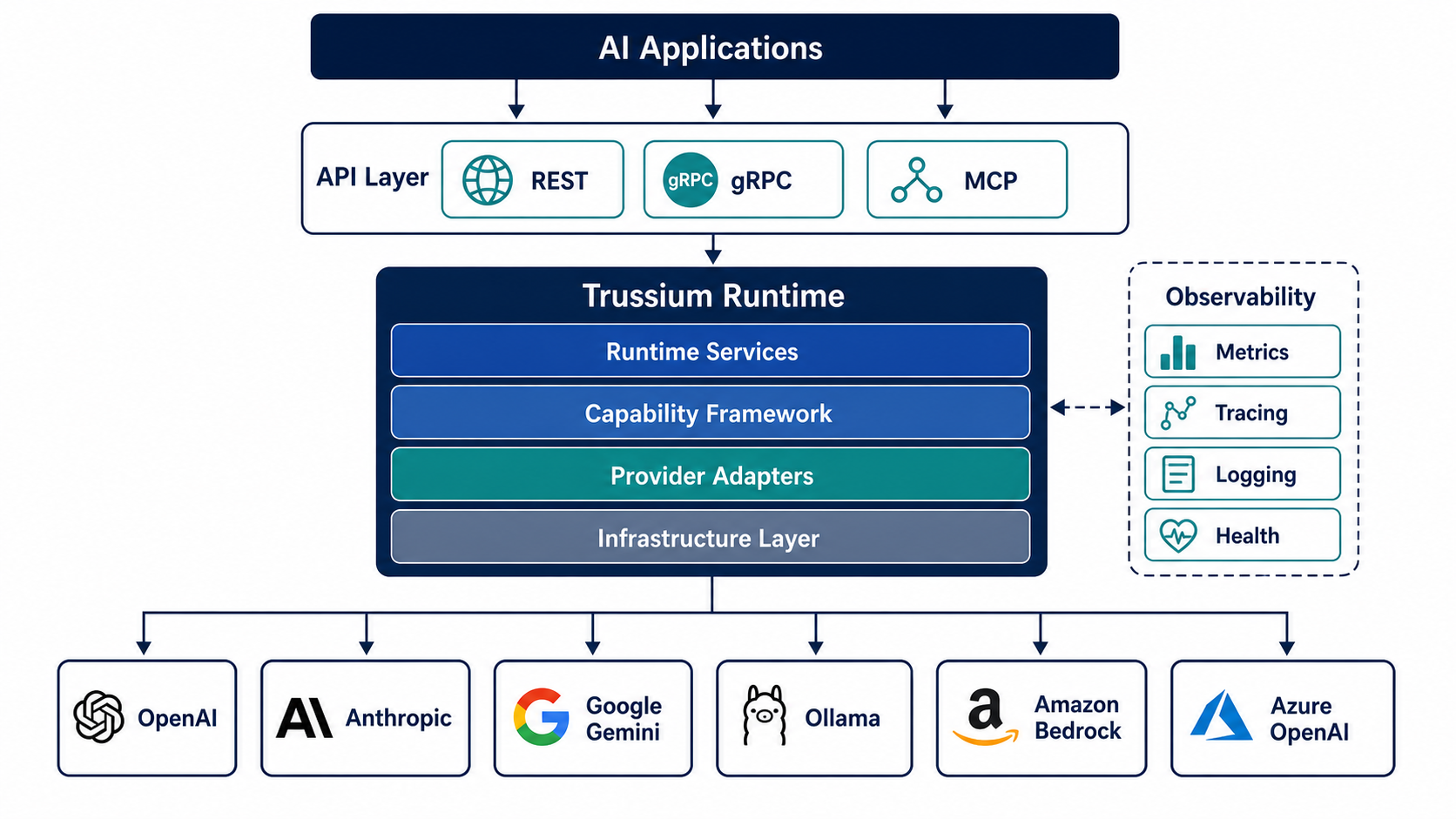
Conceptual architecture: provider logos represent adapter examples; the runtime does not install or require every provider shown.
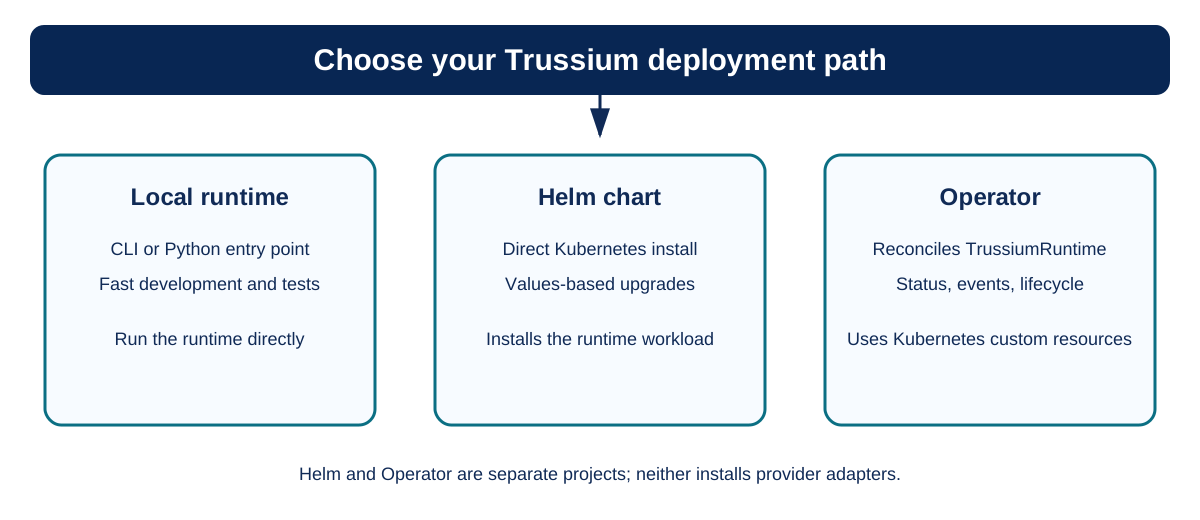
Deployment and request flows
Choose the deployment model that matches your operating needs:
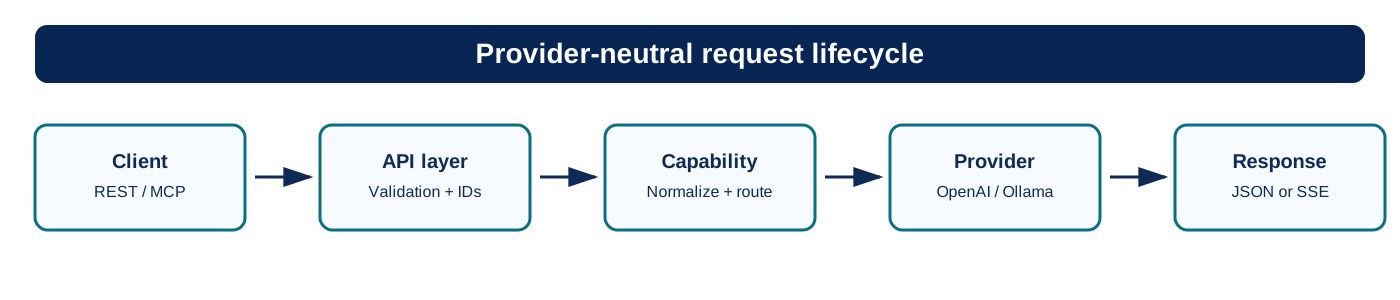
Every integration follows the same provider-neutral request lifecycle:
Project components
Runtime
The Trussium runtime provides the core execution platform, including capability contracts, provider integration, health endpoints, metrics, tracing, and structured operational logging.
Kubernetes Operator
The Trussium Operator
manages TrussiumRuntime resources through a Kubernetes-native reconciliation
loop, including runtime configuration, deployment lifecycle, status, events,
and upgrades.
Helm chart
The official Helm chart packages the runtime for configurable Kubernetes installation, upgrade, and operational deployment.
The chart installs the runtime workload. It does not install the Kubernetes
Operator; the Operator is a separate project for teams that want
TrussiumRuntime custom resources and reconciliation.
Choose a starting point
Use the Task guides section in the navigation for a direct path through a common workflow. The links below provide the same entry points with context:
- Run locally: start with the runtime CLI and API usage guides.
- Run privately: follow self-hosting, then review provider configuration.
- Deploy to Kubernetes: use the Helm chart for a direct runtime deployment, or the Operator overview for reconciled custom resources.
- Operate in production: review health and readiness, metrics, tracing, and shutdown behavior.
Current release baseline
The public components are independently versioned. The current baseline is:
The runtime, chart, and operator remain independently versioned components;
SDKs and provider adapters are optional integrations. The runtime’s bounded MCP
tool-execution surface, including the bounded ping handshake, declared tool
input schemas, cursor pagination, lifecycle notifications, and explicit tool
success status, is included in the v1.22 release line and is documented
in the Runtime capabilities section. The Operator compatibility matrix records
the Operator-validated runtime v1.27.0 / chart v1.3.0 combination.
Project status
The public roadmap and architecture decisions describe the supported contracts and their maturity. Start with the runtime roadmap, then consult the relevant component's release and compatibility guidance before upgrading.
Documentation
Use the navigation to access runtime, operator, and Helm documentation. Each section covers public contracts, deployment guidance, operational behavior, and architecture decisions. Contributions and documentation corrections are welcome through the contributing guide.